1
article
United States
Orica
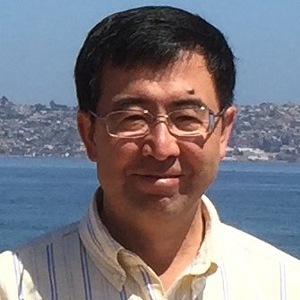
B.Sc., Northeast University, China, Ph.D, JKMRC, Australia, Post Doctoral Fellow, Queens University, Fellow of Canadian Academy of Engineering, Registered P. Eng. Ontario before moved to US in 1999.
Worked with Orica for 28 years, he is principal research fellow, the highest technical designation within the Orica Organization. He has a broad range of experiences in highwall stability, blast vibration, fragmentation control, explosive testing, blasting diagnosis and modeling.
He has developed several advanced blasting theories, models, and field measurement systems that have made significant impact to the field. Highlights include: the shock wave theory in soft rock that solved the long-standing field sympathetic detonation and post blast fume problems at Powder River Basin and elsewhere in the world, that greatly improved coal mining productivity, safety, and environmental effects and contributed to understanding of blasting in soft rock; he discovered the effect of electromagnetic fields from detonation on electronic detonator malfunctioning in some specific geological conditions, that led to a redesign of electronic detonators improving safety and eliminated detonator field malfunctioning; his fundamental work relating blast vibration to dynamic strain, which is a foundation of his MBF model; static and dynamic strain measurement from GPS survey and synchronized blast vibration measurement. He is the author of: 3D Muckpile Formation Model (3DMuck), Multiple Seed Waveform (MSW) blast vibration model, Multiple Blasthole Fragmentation (MBF) model, and Multiple Blasthole Dynamic Pressure (MBDP) model. All these models simulate full blast design and geometry and share the same input from near-field characterization of signature hole blast vibration.
He has developed a kinematic approach for blast modeling that uses measurable kinematic properties of blasting to formulate blast models and enables the models he developed to catch major trends of blasting and model full-blast design with all design parameters and boundary geometries. These models have been implemented at many mining and civil