
Abstract
Many miners have set corporate decarbonization targets but are struggling to implement decarbonization projects at the site/operations level. This presentation will take the audience on a journey into the future as we walk through a hypothetical decarbonization roadmap for a base metal mine in northern Canada. Before we do that the presentation will provide a detailed framework for how to develop a roadmap as well as the individual components that make up pieces of a viable and actionable roadmap.
The challenges that faces the industry is described in the figure below:
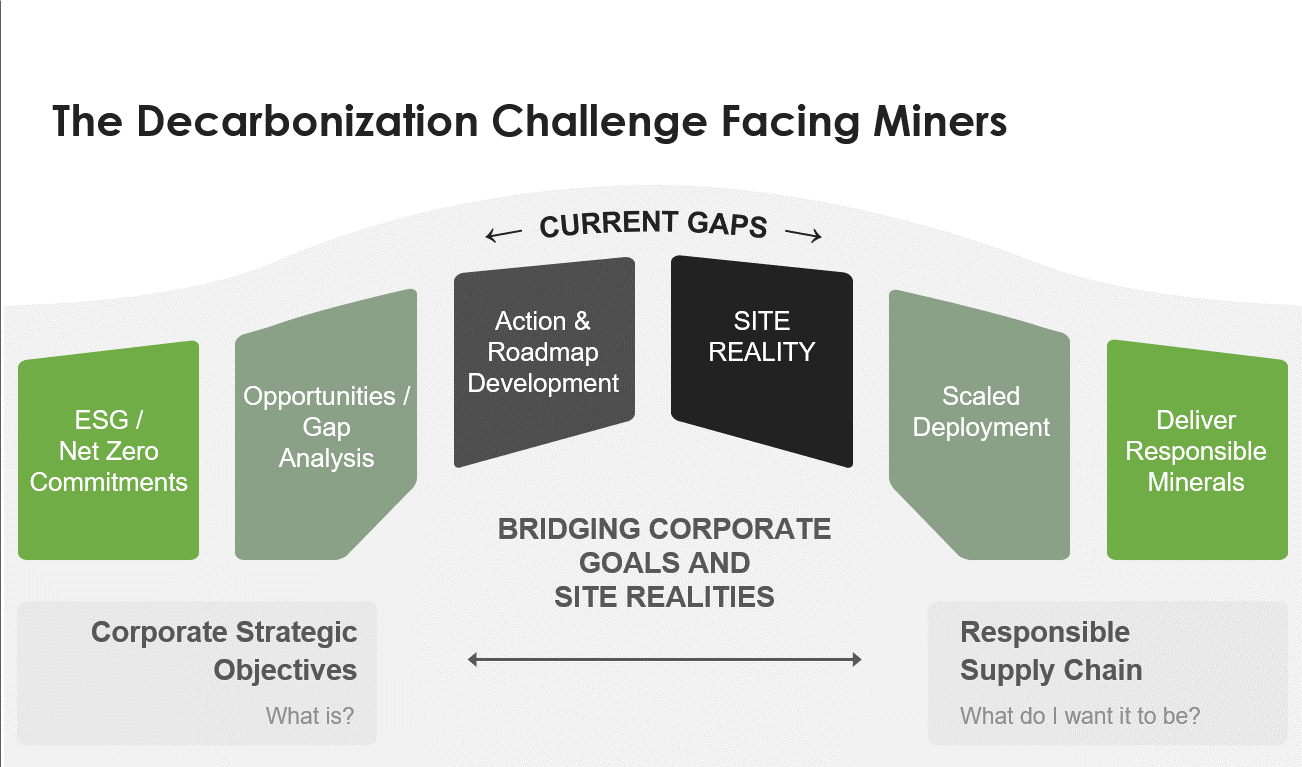
The presentation relies on real world experience that the presenter has had working with mining companies to work through some the challenges faced when developing a decarbonization roadmap.
The components of a viable and actionable roadmap include:
- Target Setting + Milestones – We need to understand what we are aiming for.
- Energy Audit – There is a lot of efficiency gains and energy reduction opportunities.
- Natural Capital – Understanding the value and potential for decarbonization.
- Renewable Energy Assessment – Looking at options either part of grid power or at site.
- Climate Risk Assessment – Knowing how resilient your assets and decarbonization plan is.
- Low Carbon Material Handling – Assessing technologies like:
- Fuel Switching
- Trolley Assist
- IPCC
- Battery/Hydrogen
- Hybrid
- Nature Based Solutions – utilizing closure plans and nature for decarbonization.
- Capital Cost Schedule – How much and when do we need capital.
- Project Execution Schedule – When do the projects need to be studied/developed to be executed on-time.
- Detailed RACI – everyone in the organization needs to understand who is responsible for what part of the decarbonization roadmap.
Benefits of including each of the above points will be covered as well as challenges that each of these items brings along the road mapping process.
A connection will be made throughout the presentation between a comprehensive decarbonization roadmap and transition plans as required by certain regulations. This especially lends itself to the conversation around transition finance and other ESG driven investment vehicles that are potentially available to mining companies.
The presentation will then provide an overview of what a potential roadmap could look like for a base metal mine in northern Canada. This is intended to give the audience a real-world example and how a decarbonization roadmap comes together to bridge the gap between a strategy and executing projects to achieve reduction targets.
To conclude the audience will be asked to challenge their understanding of what the mine of the future can and will look like. Decarbonization is seen as the “engine” that pulls forward other ESG metrics and changes the way we mine. A comparison to car manufacturing will be used to highlight the potential for change in mining, recognizing that the mine of the future will be more automated, have fewer people, and be AI driven.