

Abstract
Clean Energy Research Platform, King Abdullah University of Science and Technology (KAUST), Thuwal, 23955-6900, Saudi Arabia.
Abstract
Phosphate rock is a vital mineral resource extensively used in the chemical industry and agriculture (Abouzeid). Phosphate ores show a wide diversity in the composition of their gangue materials. Among these, calcareous ores are particularly common (Petr). These ores typically contain calcite and/or dolomite as major impurities. Efficiently separating carbonates from such ores using conventional techniques like flotation is challenging due to the similar physical properties of carbonates and phosphates (Khoshjavan and Rezai).
Calcination offers an alternative beneficiation method. This process involves heating the ore to high temperatures (800–1000°C) to decompose carbonates into CaO, MgO, and CO2. The resultant oxides are removed as hydroxides through quenching and washing. However, traditional calcination is energy-intensive, requiring significant capital investment and thermal energy. Moreover, calcination negatively impacts the downstream processing of phosphate ores. It reduces the solubility and reactivity of the ore during the acid leach step of the “wet process” used to manufacture phosphoric acid. Additionally, the process alters the surface properties of the phosphate minerals (Gharabaghi, Irannajad and Noaparast).
Steam calcination is a novel alternative technology where steam acts as the reaction medium, offering several advantages: lowering the decomposition temperature of carbonates, catalyzing the reaction to increase its rate, and enabling CO2 capture through steam condensation. Additionally, because steam calcination operates at significantly lower temperatures compared to traditional calcination, it minimizes the adverse effects on the properties of phosphate ores
To the best of our knowledge, there is no published research on the use of steam to upgrade calcareous phosphate ores. The use of steam to calcine carbonate present in phosphate ores is yet to be explored and be fully understood.
Results
The calcination of phosphate ores from Saudi Ma’aden company was studied in steam environment using a custom experimental setup (Figure 1). Figure 2 illustrates the effect of temperature on the decomposition of carbonates in phosphate ores under steam. The results show that steam significantly lowers the decomposition temperature, with the reaction initiating at 600°C and achieving complete decomposition of calcite and dolomite at 700°C within 30 minutes. These findings highlight the potential of steam calcination to improve phosphate beneficiation with greater efficiency and reduced energy demands, warranting further exploration and development.
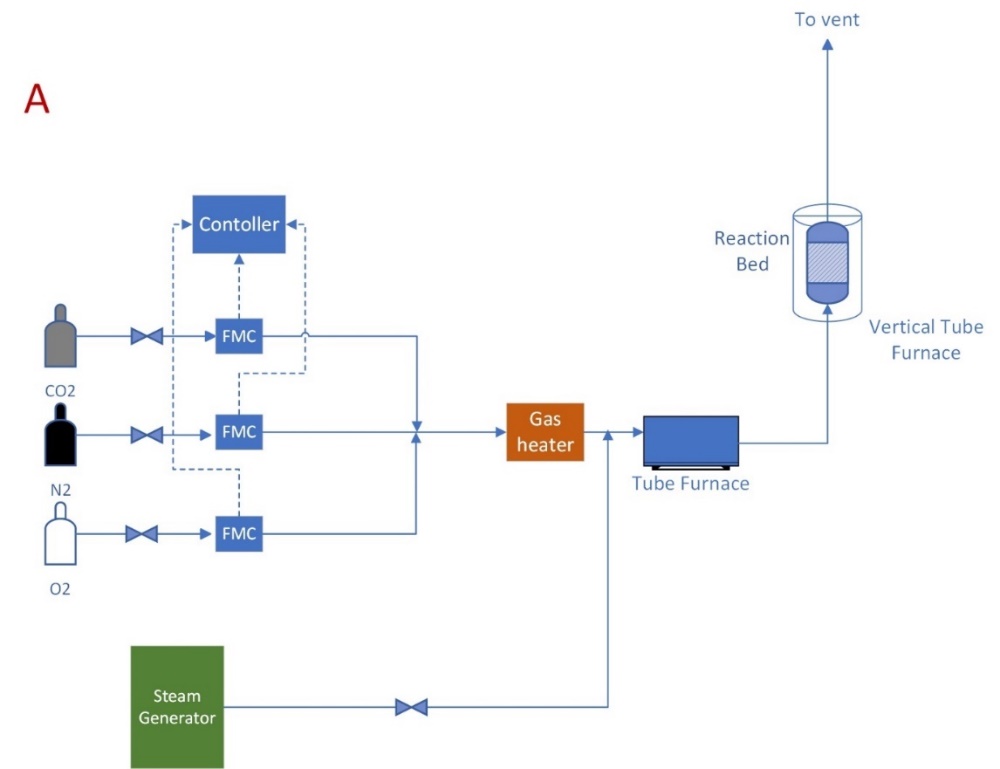
Figure 1: Experimental setup used to study steam calcination of phosphate ores.
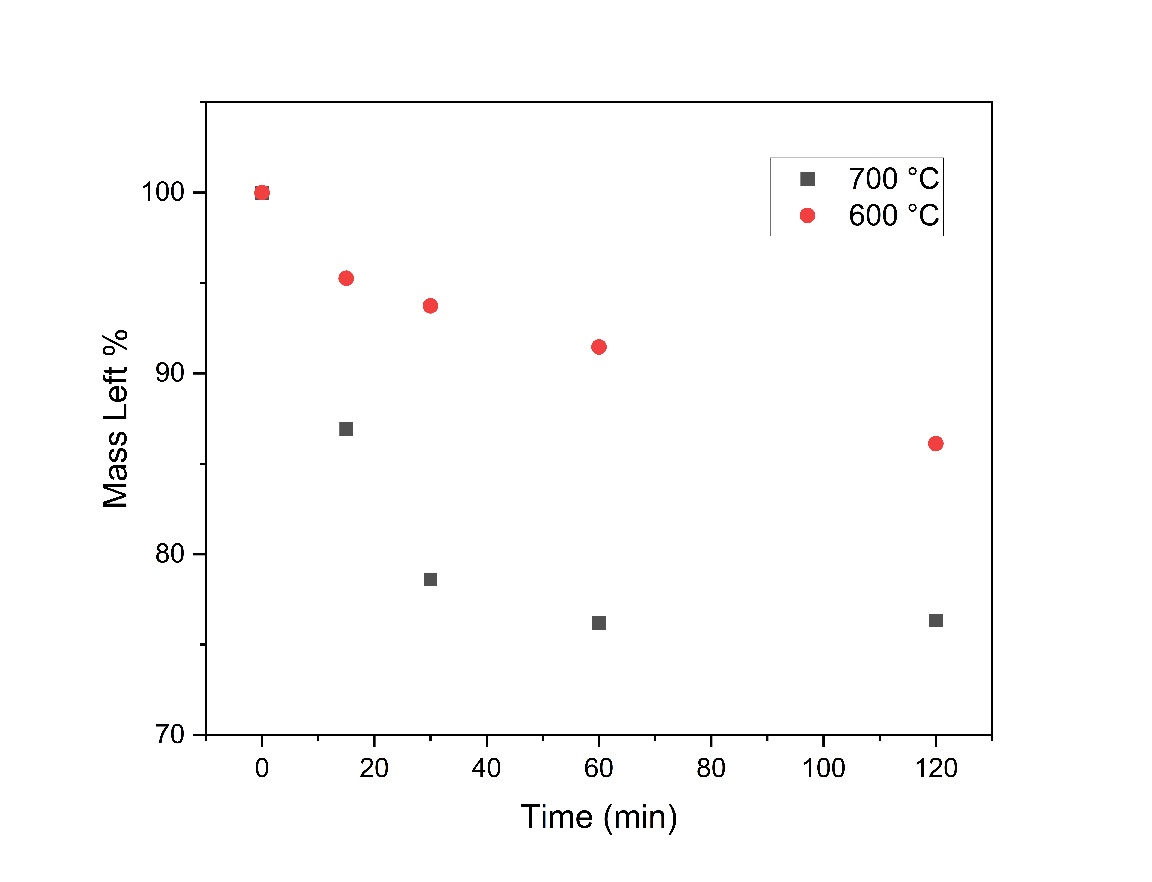
Figure 2: Decomposition Reaction Kinetics of phosphate ore in steam at different temperatures
References
Abouzeid, Abdel-Zaher M. "Physical and Thermal Treatment of Phosphate Ores—an Overview." International journal of mineral processing 85.4 (2008): 59-84. Print.
Gharabaghi, Mahdi, Mehdi Irannajad, and Mohammad Noaparast. "A Review of the Beneficiation of Calcareous Phosphate Ores Using Organic Acid Leaching." Hydrometallurgy 103.1 (2010): 96-107. Print.
Khoshjavan, S., and B. Rezai. "Beneficiation of Refractory Rock Phosphate by Calcination and Flotation." Mining, Metallurgy & Exploration 28.4 (2011): 187-92. Print.
Petr, Ptáček. "Mining and Beneficiation of Phosphate Ore." Apatites and Their Synthetic Analogues. Ed. Petr, Ptacek. Rijeka: IntechOpen, 2016. Ch. 8. Print.