

Abstract
Re-mining Li-ion batteries in Electric Vehicles
Abrishami Erfan, Green Stephen, Holanda Clara, Savage Jake, Onigbinde Oyindamola, Khosravi Nia Pegah, Venkatachalam Ajay, Videla Maria, Wang Shuozhe , Wong Benjamin
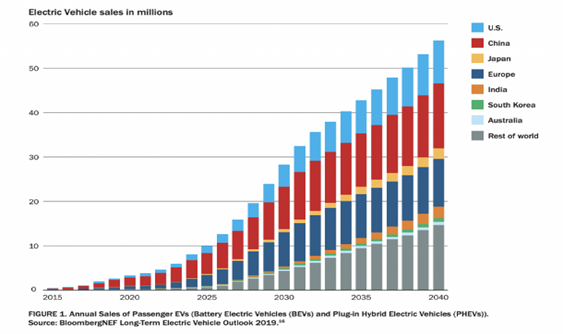
With the increase in demand of electric vehicles (EVs) in developed nations (figure 1) and rise in access to rechargeable handheld electronics worldwide, the demand for lithium-ion batteries is slated to continue rising. Studies show that demand for Li-ion batteries rose from 60 GWh in 2015 to 300 GWh in 2020 and expecting to reach 2 TWh by 2030.
|
Figure 1 Demand of electric vehicles (EVs) in developed nations |
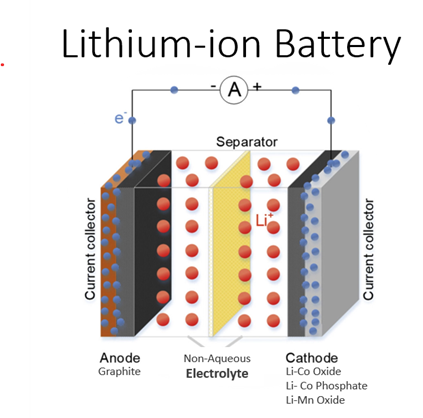
Lithium, which is one of the primary metals in Li-ion batteries (figure 2), has experienced a 5-fold surge in price in 2021. Traditional mining’s integration of new mines and the restarting of idle mines is forecasted to increase Lithium supply by 28% in 2022 and another 27% increase in 2023. However, it is predicted that this forecasted increase in supply won’t meet the demand for lithium. The present consecutive shortfall in production shows a cumulative deficit accelerating to 300, 000 tonnes of Lithium Carbonate Equivalent (LCE) 2030.
|
Figure 2. Example of components of Lithium-ion Battery |
Lithium-ion batteries recycling is, therefore, a necessity to alleviate material shortage limitations while improving environmental sustainability. However, several issues make recycling lithium-ion batteries difficult as EV batteries now have an end-of-life net cost to recycle, with transportation charges, which are currently classified as hazardous waste, accounting for more than half of the end-of-life recycling costs.
Initiatives have been taken by the private sector and governments. In Ontario, Canada, the provincial government has initiated measures such as Extended Producer Responsibility. As Governments increasingly regulate the e-waste industry, significant improvements in technology have been used to recover metals and materials from the once discarded products.
To conclude, the public and private sectors will need to come together to think of technological and political innovations to both keep up with the rising demand for Li-ion batteries while maintaining its ESG principles. What we are proposing through this project is to look at the socioeconomic and environmental issues faced by the increase in Li-ion demand while analyzing trending technological innovations being thought out by companies and governments, especially in Europe and North America.